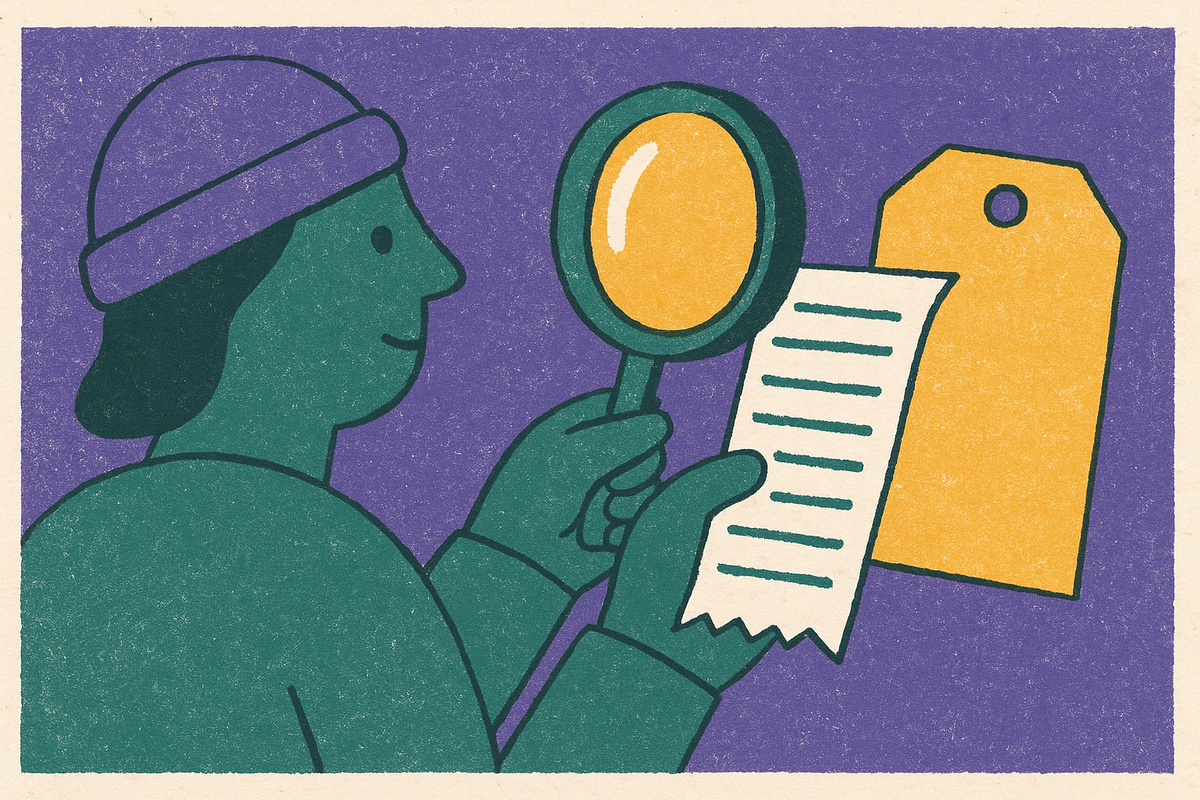
Bill Juggling as a Household Financial Strategy
Monthly audits can't catch subscription creep happening across multiple payment platforms at once.
Most people carry a low-grade suspicion that they're paying for things they don't use anymore. That instinct is correct, and the usual response, "I'll do an audit sometime," is no longer a workable fix. Bill juggling has shifted from an occasional cleanup task into a permanent household discipline, because the recurring-charge landscape has grown too dense, too scattered, and too fast-moving for a once-a-year review to catch what's actually happening.
The scale backs this up quickly. A nationally representative West Monroe poll found the average American spends a significant sum every month on subscriptions, and most people guess far below what they actually pay when asked to estimate it. That gap between guess and reality doesn't close on its own. Auto-pay defaults keep charges running without a second look, the amounts are small enough to stay below notice, and the money moves across credit cards, debit cards, PayPal, Apple ID, Google Play, Amazon, and bank auto-debits, so no single statement ever shows the full total.
The stack keeps growing underneath that invisibility. Streaming services raised prices across the board in 2025, Netflix raised prices again in March 2026, and a new category has stacked on top of all of it: premium AI tools like ChatGPT, Claude, and Google AI settled around $20 a month each in early 2026. Cost, not content, has become the top reason people cancel streaming subscriptions, which shows the financial pressure is pushing people to act. Canceling in response to a bill that finally hurts is a reaction, not a system, and a reaction only fixes the one charge that happened to get noticed.
What "subscription creep" means mechanically
Subscription creep is the output of a billing environment built, on purpose, to make signing up effortless and forgetting easy.
Part of it is psychological. People notice one large charge far more readily than many small ones, so vendors price things at low monthly points. Once a subscription has been running a while, the sunk-cost instinct kicks in too: people keep paying partly because they've already paid for months, and quitting now feels like wasting what came before.
Part of it is interface design. Dark patterns, deceptive choices built into signup and cancellation flows, make joining a single click and leaving a maze. Free trials are the clearest version of this: agreeing to a free trial usually means agreeing to a full subscription that activates automatically the moment the trial ends, with no further action required from the person who signed up.
Part of it is simply where the money moves. Charges land across multiple payment rails at once, so a credit card statement alone never tells the whole story. A complete view means checking credit cards, debit accounts, PayPal and Venmo, Apple ID, Google Play, Amazon subscriptions, and bank auto-debits, separately, every time.
Auto-pay ties all three mechanisms together. A charge that never requires action never triggers a decision, and a charge that never triggers a decision never gets canceled. Because the entire environment is built this way, on purpose, catching it once a year isn't enough. Vigilance has to be constant, because the system working against it never takes a break either.
The specific charges that escape without ongoing surveillance
Money leaks out through several distinct channels, each on its own timeline, and a system built to catch only one of them will still miss most of the rest.
Forgotten active subscriptions make up the most direct leak. The West Monroe poll found a meaningful share of consumers are currently paying for at least one service they've completely forgotten exists. Nothing flags the charge, so nothing stops it.
Free-trial conversions work on a tighter clock. A large majority of Americans have started a free trial planning to cancel before it charges, then forgotten and gotten billed anyway. No reminder arrives at the moment that matters. The trial simply converts, often into a monthly charge that sticks around indefinitely.
Quiet price increases hit people who are already paying attention to their subscriptions but not to the price on each one. Services raise rates without any real announcement, so a bill that used to be one number becomes a higher number without the person ever agreeing to the change. Streaming platforms and AI tools have both leaned on this heavily through 2025 and into 2026.
Duplicate charges appear when the same service gets billed through two different rails at once, for instance a standalone subscription running alongside an Amazon Prime trial of that same service. Households where more than one person manages accounts face this risk constantly, since neither person sees the other's billing activity.
Hidden fees and drip pricing close out the list. A checkout or renewal advertises one number and adds more charges only at the very end of the process, after the sunk-cost instinct has already kicked in and the person has mentally committed to the purchase.
Monitoring charges in a real bill-juggling system
A real bill-juggling system is a set of standing habits, organized around how urgently each threat type needs attention, running at all times.
At signup, every free trial needs to be treated like a financial commitment with a deadline attached the moment payment details go in. The safe default is to assume it will convert to a paid subscription unless it gets actively canceled in time. Virtual card numbers, available through services like Privacy.com and through Capital One's virtual card feature, can be set to expire right after a trial period ends, so a billing attempt simply fails on its own.
Within the price-drop window of a purchase, the clock runs fast. Retailers like Target close their price-match windows quickly, so checking for a price drop at the moment of purchase, and again right before the window shuts, only pays off if it happens inside that deadline.
Monthly, every payment rail needs a pass, not just the primary credit card. That means watching for new recurring charges, price changes on subscriptions already running, and duplicate charges spread across different billing sources.
After every delivery, credits require the customer to ask for them. Walmart states that customers may be entitled to a refund of delivery fees and tips if a scheduled delivery runs late and they choose to switch to pickup instead, but that refund only comes if the customer makes the switch. Amazon's policy works similarly: it requires a claim and doesn't compensate automatically.
Quarterly, a deeper pass checks whether subscriptions still running are still earning their keep. The test is simple: if a service hasn't been used recently, or its loss wouldn't register by tomorrow, it belongs on the cancellation list.
A one-in-one-out rule keeps the stack from growing between those quarterly reviews. Adding any new subscription means canceling an existing one, which matters most right now in the AI tool category. Stacking premium tiers of ChatGPT, Claude, and Google AI at roughly $20 a month each is the same trap that streaming subscriptions set five years ago, just with a new set of logos.
Where human-managed systems fail
Even a carefully built manual system breaks down at a few predictable points, where timing, attention, and coverage all have to line up at once, and the charges that slip through are exactly the ones nobody has time to watch every day.
Coverage is one weak point. A manual review only catches what the person remembers to check, and charges routed through Amazon, Apple, Google, or PayPal are easy to leave out of a credit card review that feels thorough but isn't.
Timing is another. Price-drop windows, trial expiration dates, and late-delivery claim periods all demand action inside a specific window that frequently falls outside a person's monthly review schedule. The window closes before the review ever happens.
Attention is the third weak point, and the hardest to fix with willpower alone. Even people who genuinely intend to monitor their accounts closely admit they don't follow through, and the promise of a future audit becomes its own form of subscription creep, where the cost of not paying attention keeps adding up quietly in the background.
Vendors hold a built-in advantage here. Cancellation flows get designed to be difficult, renewal confirmations get buried in fine print, and price increases get communicated as quietly as the law allows. The FTC's "Click to Cancel" rule, effective in 2025, has cut down some of that friction, but it doesn't close the timing and coverage gaps a consumer still has to manage alone.
That's where a lot of people stop and ask whether connecting financial accounts to a third-party tool is safe. The answer depends on which technology is doing the connecting. Older screen-scraping tools required handing a startup a real bank password, which was a legitimate risk. Modern tools connect through read-only APIs using OAuth 2.0, which removes credential sharing from the equation entirely: the service can see transaction data, but it has no ability to move money. That distinction is why a large share of consumers have already made peace with connecting accounts this way. A global Mastercard survey found 76% of consumers currently connect their financial accounts to outside services, and the mechanics behind that security are worth understanding even though the objection has already been answered for most people.
Building the system today
Building the system starts by mapping every payment rail currently carrying a recurring charge, not just the one credit card that gets checked out of habit. This single step catches more forgotten money than any review that comes after it.
Step one: pull three months of statements from every payment source, credit cards, debit accounts, PayPal and Venmo, Apple ID, Google Play, Amazon subscriptions, and bank auto-debits. Mark every recurring charge on each one, no matter how small it looks.
Step two: run each charge through two questions. Has it been used recently? Would its loss be noticed by tomorrow if it got canceled today? Any charge that fails both questions goes on the cancellation list immediately.
Step three: for streaming and AI tool subscriptions specifically, rotate which services stay active. Keep one or two services active, cancel the rest, and bring them back later when there's something new to watch or use. Streaming has no contracts, so rotation costs nothing beyond the effort of signing back in.
Step four: treat every future signup as a commitment with a deadline attached the moment payment details get entered. Set a cancellation reminder before the trial ends, or use a virtual card number built to expire right when the trial does.
Step five: for any purchase made at a retailer with a price-match or price-protection policy, note the purchase date and check the price again before the window closes. Target's window moves fast. Microsoft Store gives a much longer 60-day window from the delivery date. Newegg's Black Friday price protection refunds the difference automatically within its eligible window. Amazon has no formal policy and requires a direct request to customer service.
Step six: hand the ongoing watching to a tool built for exactly that job. A manual pass can clear the backlog that's already built up, but the permanent gap, the continuous monitoring no monthly review can realistically cover, needs something running at all times, not something revisited on a schedule.
A one-time audit is a starting line. The system is everything that runs after it, the permanent, low-effort infrastructure that catches what manual attention is bound to miss. The recurring-charge landscape will keep shifting, prices will keep climbing quietly, and new categories of subscription will keep stacking on top of the old ones. The only system built to match that pace is one that never stops watching.