Subscription Sharing and Account Pooling as Cost Reduction
Most people don't know what they're actually paying for each month.
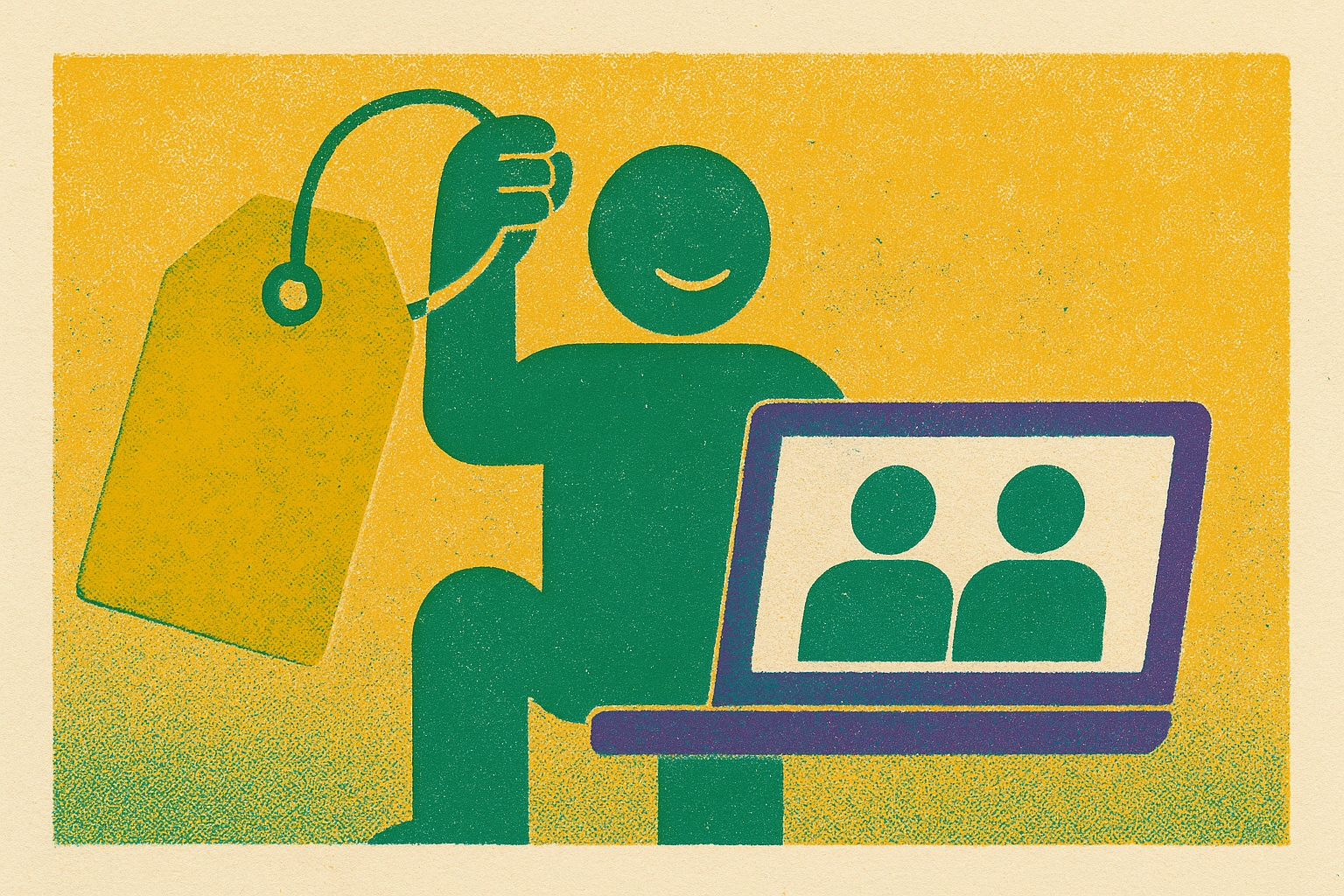
Subscription sharing and account pooling can cut a real chunk out of the monthly bill, but neither works until someone knows what's actually on that bill. Nearly three in five subscribers, 59.9% according to Self Financial's survey, report at least one subscription going completely unused every month, and the average person is carrying 2.6 unused subscriptions at a time. Subscription costs have actually trended down slightly year over year in that same Self Financial data, but the count of unused subscriptions has also drifted down, so the leak has merely gotten harder to spot. This is a problem of attention, not pricing, visible most clearly in households that carry duplicate subscriptions, two music services, overlapping cloud storage plans, without ever noticing the overlap, because nobody has sat down and listed what's actually being paid for. That missing inventory is exactly where sharing conversations stall before they start. Fixing the overlap and finding real sharing opportunities both start with the same step: a plain list of every active subscription, what it costs, and whether anyone in the house has opened it in the last month.
The two structural models for sharing subscriptions
Subscription sharing isn't one strategy. It splits into two models that work differently, cost differently, and suit different people, and mixing them up is how someone ends up paying for the wrong tool entirely.
The first model is peer-to-peer splitting. A person joins or forms a group to share the open slots on an existing family or multi-user plan, and a platform in the middle handles collecting payment and delivering access. This works because services like Netflix, Spotify, YouTube Premium, Disney+, and Apple's One Family and Premier plans were priced on the assumption that households would share them. Peer-to-peer platforms simply extend that same math to people who don't live under the same roof. This model fits anyone who wants to keep using a specific streaming, music, or gaming service without paying the full solo price.
Shopiator's 2026 roundup of active peer-to-peer platforms includes Together Price, which charges a small service fee per transaction that varies by plan and covers major streaming, music, and gaming services, and Sharingful, which charges a service fee per transaction that varies by service, covers major streaming and music platforms, and claims savings of up to 70% of total subscription cost.
Alucare's August 2026 tested roundup adds: U7BUY runs on a marketplace model covering streaming, gaming accounts like Xbox Game Pass and PlayStation Plus, and AI tools including Netflix, Spotify, YouTube Premium, and ChatGPT, with PayPal accepted in certain regions, buyer protection, and customer service rated as very responsive. Coosub covers a range of services with secure payments and a money-back guarantee, though some subscriptions, Netflix among them, are occasionally out of stock. GoingBus offers round-the-clock customer support and immediate delivery after payment, with a refund window limited to a short period after purchase and a coupon code, ALUCARE, for a reduction.
The second model is the managed bundle. Instead of splitting one subscription with strangers, a single flat monthly fee buys access to an entire curated catalog of tools, with no co-subscriber matching or coordination needed. This model fits ecommerce operators, marketers, and anyone juggling multiple software subscriptions who doesn't want to manage each one separately.
From Shopiator's 2026 roundup: ToolSuite charges a fixed monthly price for a broad catalog of ecommerce and AI tools, including Canva Pro, ChatGPT, Kalodata, and Pipiads, backed by a large membership base and strong ratings across a substantial number of reviews, though it isn't built for personal streaming use. StealthPack Pro charges a fixed monthly price for access to more than 40 ecommerce, AI, and editing tools.
These two models solve different problems and don't really compete with each other. Someone who wants a cheaper Netflix bill needs a peer-to-peer platform. Someone paying separately for six different SaaS tools needs a bundle.
Calculating the real savings range for your situation
The size of the savings depends entirely on which model fits the situation, and the two models should be measured with different math.
Peer-to-peer platforms advertise meaningful cuts off the full retail price of the subscriptions they split, with Sharingful's own claims reaching as high as 70% in some cases. Since that figure comes from the platform itself, treat it as an upper bound rather than a guarantee.
The managed-bundle math is easier to pin down with actual numbers. ToolSuite's monthly price covers tools that, bought separately, already cost more than the bundle itself: Canva Pro alone, combined with ChatGPT Plus, exceeds what ToolSuite charges for the whole catalog. Anyone who needs both tools comes out ahead before even counting a third one.
Billing frequency changes the math too. Self Financial's 2026 survey found that most subscribers pay monthly, a smaller group pays weekly, and only a very small share pays annually, even though annual plans are cheaper overall. Someone who watches Disney+ Premium consistently all year and switches to the annual plan saves a meaningful amount compared to paying monthly the whole way through. That saving comes with a catch: it only pays off for someone who actually uses the service for all 12 months, since Disney+ subscribers billed directly who cancel early get no refund, just continued access until the current billing period runs out.
None of this math means anything without a starting inventory. A household needs a full list of its active subscriptions before picking a sharing model, otherwise any savings estimate is just a guess, and there's a real risk of signing up for a shared version of something the household is already paying for and forgetting about.
Which subscriptions permit sharing
Not every form of sharing carries the same risk. Sharing within a household is explicitly allowed under the terms of service for services like Netflix and Spotify, since family and group plans were designed to support it.
Sharing with strangers through a third-party platform is a different situation. Peer-to-peer platforms that match people together to split plan slots operate in a gray zone that runs against most platforms' terms of service, and that carries consequences: accounts can get locked out, memberships can get terminated, and the platforms facilitating the matches can shut down entirely.
Netflix already showed what enforcement looks like. Its 2023 crackdown on password sharing outside physical households remains the clearest example in the industry of a major platform actively shutting down this kind of arbitrage, and it's still the reference point for how seriously these companies take it.
The legal exposure isn't limited to enforcement by the platforms being shared. Alucare's roundup notes a legal judgment affecting Spliiit specifically, though the source text cuts off before explaining the details. Even without full detail, the mention signals that regulatory and legal friction against these sharing platforms is an active concern.
The managed-bundle model sidesteps this particular risk since it doesn't involve splitting access to someone else's personal account. It introduces a different kind of dependency instead, tying the user to the bundle operator's own account infrastructure and whether that business stays running. Before joining any sharing arrangement, check the current terms of service for the subscription in question. Terms change, and permissions that existed last year may not exist now.
Free trial traps and the pattern that quietly converts sharing savings into new charges
Getting into a sharing arrangement often means signing up for something new, a platform account, an upgraded tier, a trial period, and that reopens the same door that created subscription sprawl.
Self Financial's 2026 survey found that most respondents had forgotten to cancel a free trial at some point, with many saying it happened more than once, and a notable share saying it happened at least three times. The regulatory backdrop here has shifted recently. The FTC's "Click-to-Cancel" rule, built to target the deceptive design that makes canceling a trial difficult, was vacated by a federal appeals court in July 2025. The FTC hasn't stepped back from the underlying problem. It continues pursuing the same goal through ROSCA and Section 5 of the FTC Act, and that enforcement is active: in January 2026, the FTC sued JustAnswer, alleging that consumers were enrolled in recurring monthly subscriptions without giving real consent, after clicking something that looked like a one-time payment.
Sharing platforms themselves aren't exempt from this pattern. Some offer trial periods or introductory access of their own, and the same lapse in attention that let an old subscription keep charging quietly will do the same thing to a brand-new platform membership.
There's a workable countermeasure for annual plans specifically: cancel immediately after paying, which stops the plan from auto-renewing 12 months later while still leaving full access in place for the period already paid for. Many services allow this, and it removes the risk of a surprise renewal without costing any access in the meantime.
AI agents handling subscription detection and cancellation
Subscription sprawl isn't a problem that gets solved once. It needs ongoing attention, and a growing set of tools now handle that attention automatically instead of leaving it to memory.
Kudos Premium runs autonomous AI agents that find, track, and cancel forgotten subscriptions. Once something gets flagged, a Premium member requests cancellation with a single tap, and the Kudos agents act on the member's behalf as authorized representatives, logging into merchant portals, sending cancellation emails, and handling live chat without the user doing any of it directly.
A separate service navigates the same cancellation dark patterns on the user's behalf. The user clicks once, and a support team, or for higher-tier subscribers, an AI agent reachable by text, contacts the provider directly to finish the cancellation.
"Finances in ChatGPT," which launched May 15, 2026 for US Pro and Plus tiers, links banks, brokerages, and cards through Plaid for read-only analysis. It's useful for spotting spending anomalies and auditing subscriptions, though reviewers have flagged four separate privacy concerns to weigh before connecting real financial accounts.
The distinction that separates these tools from each other is whether they just show the list or actually act on it. A tool that surfaces a subscription list still depends on the user following through, which brings back the same inattention problem that created the sprawl. A tool that cancels on the user's behalf closes that loop without requiring the follow-through at all.
The security question in connecting accounts to these tools
Every one of these tools, whether it's a peer-to-peer sharing platform, a managed bundle, or an AI agent built to find and cancel subscriptions, asks for some level of account access to function. A sharing platform needs enough access to deliver a login or manage a shared slot. A cancellation agent needs enough access to log into merchant portals and act as an authorized representative on the user's behalf. A financial tool like "Finances in ChatGPT" needs a read-only link through Plaid to banks, brokerages, and cards in order to analyze spending.
That access comes with a tradeoff that depends on what each tool actually does with it. Read-only financial links are a narrower form of access than giving an agent the ability to log into an account and take action, like canceling a subscription or completing a transaction, on a user's behalf. The privacy concerns flagged around "Finances in ChatGPT" are a reminder that even read-only access to banks, brokerages, and cards is still a real exposure. Before connecting any account to a sharing platform or an AI agent, check what level of access is being granted, what the tool is authorized to do with it, and whether that access can be revoked cleanly if the arrangement doesn't work out.