Digital Banking Access Gaps for Rural and Elderly Populations
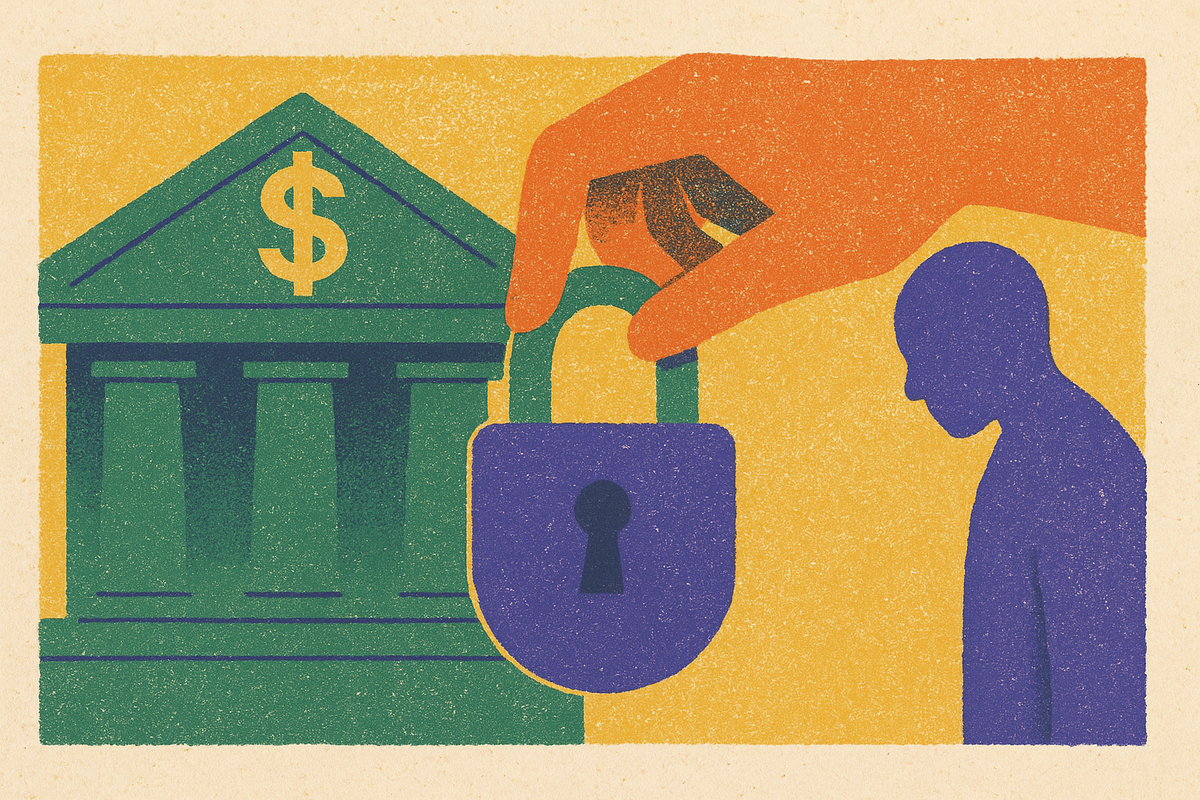
Closing bank branches leaves seniors and rural adults unable to catch fraud and hidden fees.
That is a money problem, not a technology complaint. It is a money problem, because catching an erroneous charge, spotting a fraudulent transaction, or noticing a subscription that quietly doubled in price all depend on one thing: looking at the account regularly. Digital banking has become the default channel for that kind of routine oversight, but not everyone has moved onto it. The Federal Reserve's Report on the Economic Well-Being of U.S. Households, published in May 2025, found that 6% of U.S. adults were unbanked in 2024, up from a lower share back in 2020. Layer onto that the FDIC's 2023 survey finding that 14.2% of U.S. households were underbanked, holding an account somewhere but still lacking full access to mainstream financial services, and you get a population in the tens of millions operating with partial or delayed visibility into their own money. Underbanked status usually means falling back on paper statements, an occasional branch visit, or a phone call to customer service, and each of those creates a lag between the moment money actually moves and the moment the account holder notices. That lag is exactly where money disappears: disputes age past their filing windows, refunds go unclaimed, and subscriptions renew constantly without anyone catching it.
How bank branch closures removed the fallback option for people who never adopted digital banking
For a lot of older and rural consumers, walking into a branch was never a preference. It was the actual method they used to monitor their money, the equivalent of what a mobile app does for everyone else. That method is vanishing. The United States is projected to see between 900 and 1,400 branch closures in 2025 alone, the highest national total anywhere in the world, coinlaw.io research finds. It's not an isolated trend: thousands of branches are being shut down globally this year. The UK shows the same pattern, with a large number of branches closed or already listed for closure, based on LINK data reported by MoneyMagpie.
What gets lost isn't just a teller window. Branches offered a person to talk to, a way to confirm an account looked right, and a set of eyes that could catch something off before it became a real problem, informal oversight that no app replicates automatically. MoneyMagpie's reporting shows that for people who spent decades managing money face-to-face, losing the branch means longer trips, leaning on relatives for help, anxiety about remembering passwords, and more exposure to scams without anyone trusted nearby to ask. A meaningful share of seniors still lack access to digital banking tools altogether, according to coinlaw.io, which gives a sense of just how large the population stranded by these closures really is. And the dominant channel keeps shifting further away from them: UK Finance data shows mobile banking became the most common way UK adults accessed their accounts in 2024, used by a large majority of the population. Every point that channel gains, the minority left behind gets pushed further to the margins. In Spain, branch disinvestment continued at a rate of 10% per year over the last five years, per the ScienceDirect study on banking digitalization in Spain (Digital Business, June 2025).
The specific barriers that prevent older and rural adults from moving to digital alternatives
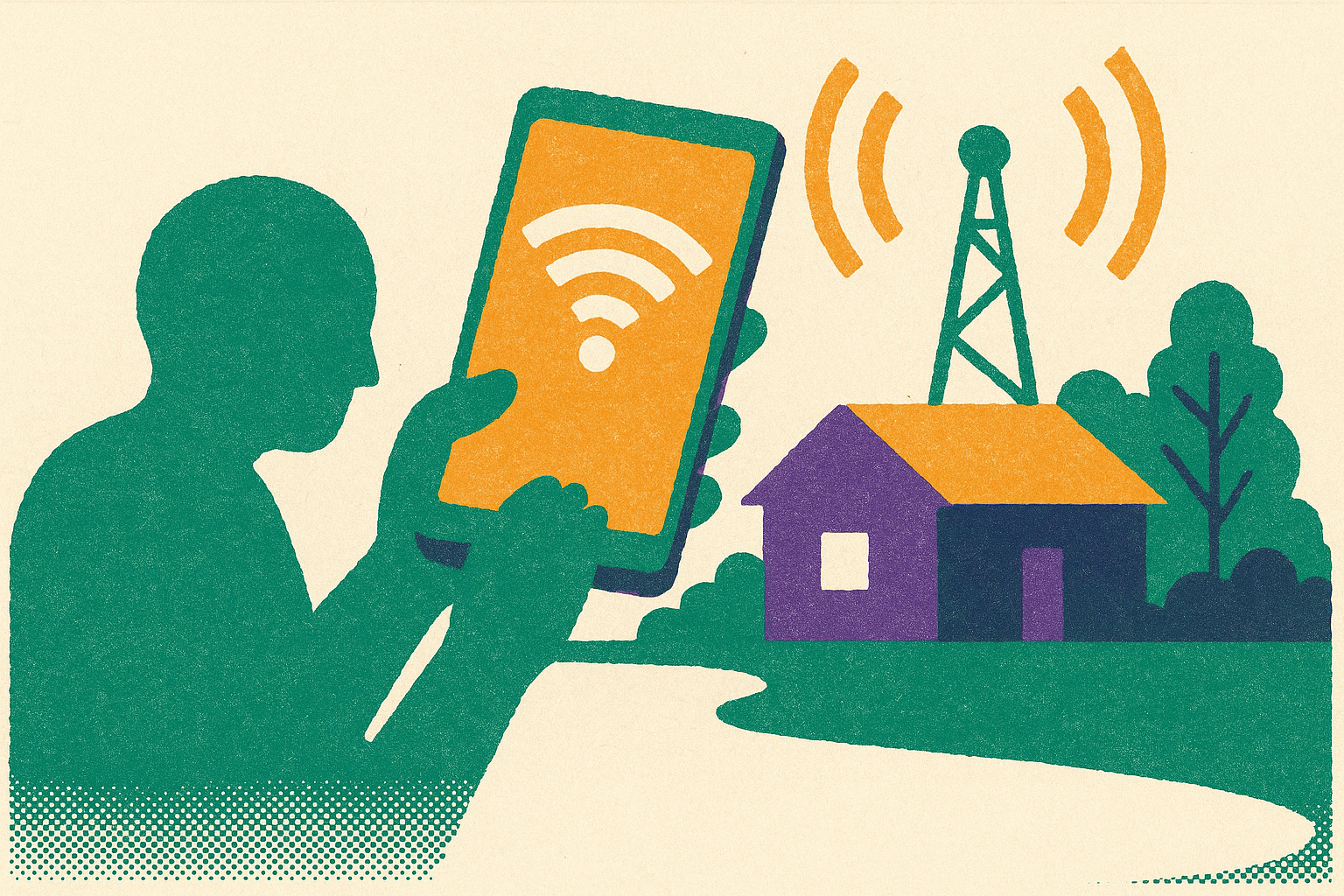
Telling someone to "just switch to the app" assumes two things: that they have the equipment, and that they're comfortable using it. Neither holds for a lot of rural and elderly adults. A 2025 study of Medicare beneficiaries in nonmetropolitan areas, run out of the University of Central Florida and published in Innovation in Aging, found that 13.9% of nonmetro beneficiaries aged 65 and older had neither a computer nor internet access at home, and another 14.4% had access to only one or the other, not both. Disability adds another layer on top of that. A separate 2025 University of Central Florida study using 2023 Current Population Survey data found that older adults with disabilities were substantially more likely to lack home technology access than older adults without disabilities.
None of that is the whole story, though. Access is a barrier, and psychology is the other barrier. A 2023 ACM conference paper on older adults and online banking identified fear of financial scams, weak digital skills, and a lack of available help as some of the biggest reasons seniors stay away from digital banking, separate from any hardware or connectivity issue. Korea, one of the fastest-aging countries on earth, treats this as an urgent, present-tense policy problem rather than something to plan for later, according to a World Bank report. And here's the detail that matters most for what comes next in this piece: owning a smartphone or a laptop doesn't automatically translate into using advanced financial tools. Device ownership and financial oversight are two different things, and closing the gap in one doesn't close the gap in the other. Within that rural group, adults aged 75 and older had significantly lower odds of having both computer and internet access compared to those aged 65–74 (OR = 0.30, p). Cross-cultural confirmation: a June 2025 ScienceDirect study (Telematics and Informatics Reports) examining Germany, Japan, and Thailand found that barriers included technological unfamiliarity, limited smartphone access, rural infrastructure gaps, and psychological hurdles such as stigma around seeking help.
What reduced account monitoring costs: erroneous charges, unclaimed refunds, and invisible fee creep
Here is where the abstraction turns into dollars. Consumers who don't check their accounts regularly face a high risk of fraud they may never even notice, according to research from Trustly, and dispute windows for erroneous charges run out fast, so delay isn't just inconvenient, it's financially fatal. Miss the window, and the money is gone for good.
Subscriptions are a clean example of how this plays out at scale. Close to half of U.S. consumers, 44%, actually increased their subscription spending in 2025, and average annual spending on subscriptions climbed to $1,887, per a report cited by CNBC. Subscriptions are built to be forgettable by design: a free trial converts automatically, a service gets used once and never again, a monthly price ticks up a few dollars without anyone announcing it. Elderly consumers unfamiliar with how auto-renewal actually works are especially exposed to trial-to-paid conversions that slip by unnoticed. Regulation was supposed to help here. The FTC's click-to-cancel rule was meant to make canceling a subscription as easy as signing up for one, but the U.S. Court of Appeals for the Eighth Circuit vacated the rule in July 2025. The FTC didn't move on a replacement until January 30, 2026, when it submitted a draft Advance Notice of Proposed Rulemaking to OIRA, with the ANPRM formally announced on March 11, 2026. For the better part of a year, consumers had none of the protection that rule was designed to provide.
Refunds work the same way. Price-match and post-purchase price-drop policies exist at most major retailers, but claiming one means noticing the price dropped, inside a narrow window, which is impossible without actively checking. Late-delivery credits from shippers and retailers follow the identical pattern: the consumer has to notice the missed deadline and file the claim themselves, because nothing happens on its own. For someone relying on a paper statement that arrives once a month or a branch visit every few weeks, most of these windows have already closed by the time the transaction even becomes visible. And the burden doesn't fall evenly. The Federal Reserve's May 2025 report found that 22% of adults in the lowest income bracket were unbanked, which means the people with the least financial cushion to absorb a wrongful charge or a missed refund are frequently the same people least equipped to catch it happening.
How fraud exploits the same monitoring gap that leaves elderly consumers absorbing the largest losses
The dollar figures here are the largest in the piece, and they belong to the people least able to catch what's happening in real time. The FBI's Internet Crime Complaint Center recorded tens of thousands of complaints from adults 60 and older in 2024, totaling an estimated $4.8 billion in losses from internet crime. Preliminary FTC data shows older adults reported more than $745 million in scam-related losses in the first quarter of 2025 alone, a pace that, if it held for the rest of the year, would blow past the entire 2024 total.
That mechanism connects directly back to the monitoring gap already described. The Federal Reserve's report found that older adults lose more money per fraud incident than younger adults, partly because they tend to have more money sitting in the account to begin with, but also because they check their accounts less often, giving fraud more time to compound before anyone notices. Scams typically show up through email, text, or a phone call, unsolicited contact that preys on social isolation and misplaced trust, both of which show up more often in elderly populations already cut off from the in-person banking relationships branches used to provide. The monitoring gap and the fraud exposure are the same problem, and that deserves saying plainly. They're the same problem wearing different clothes. A person who doesn't review their account regularly misses the wrongful charge, misses the subscription renewal, and misses the fraudulent transaction, all for the same reason, until it's too late to undo any of it. People with disabilities carry an even heavier version of this risk. They are substantially more likely to be unbanked than non-disabled adults in the same age bracket, according to self.inc, which means they're also less likely to have access to fraud alerts or any digital monitoring tool in the first place.
Why security concerns about connecting accounts online are real but often misdirected
Fear of fraud is exactly why a lot of older adults avoid digital banking to begin with, and given the loss figures above, that fear isn't irrational. But it often aims at the wrong target. Security clearly matters to consumers broadly: the vast majority say it's important that their financial institution protects their data, according to Mastercard's Open Banking report. Security clearly matters, but the actual risk sits elsewhere. It's where the actual risk sits.
Open banking-initiated payment fraud in the first half of 2025 made up a markedly smaller share of transactions by volume than the 0.045% fraud rate found across the wider industry, the Open Banking organization's financial crime update shows. And within that smaller slice of open banking fraud, most cases involve Authorised Push Payment fraud, and the danger concentrates around initiating a payment, not around simply viewing account data. That distinction changes the calculation entirely. A read-only connection, one that lets a tool see transactions without any ability to move money, is in a fundamentally different risk category than a connection that can send a payment. The fraud numbers driving public anxiety come almost entirely from the payment side, not the monitoring side.
Keeping every account walled off out of caution is an understandable instinct, but it can leave a person with less visibility into their own finances than a responsible, read-only connection would provide. Scale backs this up: Open Banking in the UK now supports more than 19 million active user connections, the Open Banking organization's payments fraud monitor shows. Wide adoption and low fraud rates are coexisting there right now, which suggests the architecture itself isn't the danger people often assume it is.
What proactive, automated account monitoring does that manual checking cannot
Catching a wrongful charge, a price drop, a subscription renewal, or a fraudulent transaction all require the exact same input: regular, attentive review of the account. That happens to be the one activity rural and elderly consumers perform least consistently, for all the reasons already laid out. Even consumers who are fully comfortable online run into the same wall, because subscription charges are built to be easy to miss, price-drop windows close fast, and refund eligibility runs on a clock that most people don't know exists until it's already expired.
They watch the account continuously, flag duplicate or erroneous charges as they land, notice when a subscription price ticks up, and surface refund or credit opportunities before the claim window shuts, all without requiring the person to log in and dig through statements. Read-only access is the right design for this job specifically: the tool needs to see the transaction to flag it, but it never needs the ability to move money, which keeps it inside the lower-risk category described in the section above. That's the real difference between a dashboard and proactive monitoring. A dashboard shows what already happened. Monitoring tells someone what to do about it, and it removes the research burden that, realistically, was never going to get done by the people who need it done most. For a rural or elderly consumer already fighting friction just to check a balance, a system that asks for zero ongoing effort after setup is essential. It's the difference between having financial oversight and not having it at all.
What individuals, families, and policymakers can do about the monitoring gap today
Start with the cheapest fix available: account alerts. Text or email notifications for any transaction above a small dollar threshold create a passive layer of monitoring that doesn't require logging in at all, which matters enormously for someone who isn't checking an app daily.
Family members of older relatives can do more good by helping them see their own accounts than by taking those accounts over. Setting up read-only monitoring tools on a relative's behalf builds real oversight while leaving their independence intact, and that distinction, oversight without control, is worth protecting.
For anyone ready to do one manual task this week, the highest-yield move is a subscription audit. Pull the last 90 days of credit card and bank statements and look for anything recurring, a forgotten trial that converted, a service nobody uses anymore, a bill that crept up a few dollars at a time. It's the single fastest way to find money leaking out through a gap nobody's been watching. On the policy side, the swings around the FTC's click-to-cancel rule show how much protection depends on regulation that can vanish overnight, which is exactly why the monitoring gap described in this piece can't wait on policymakers to close it.