Earned Income Tax Credit Claiming Gaps and Who Misses Out
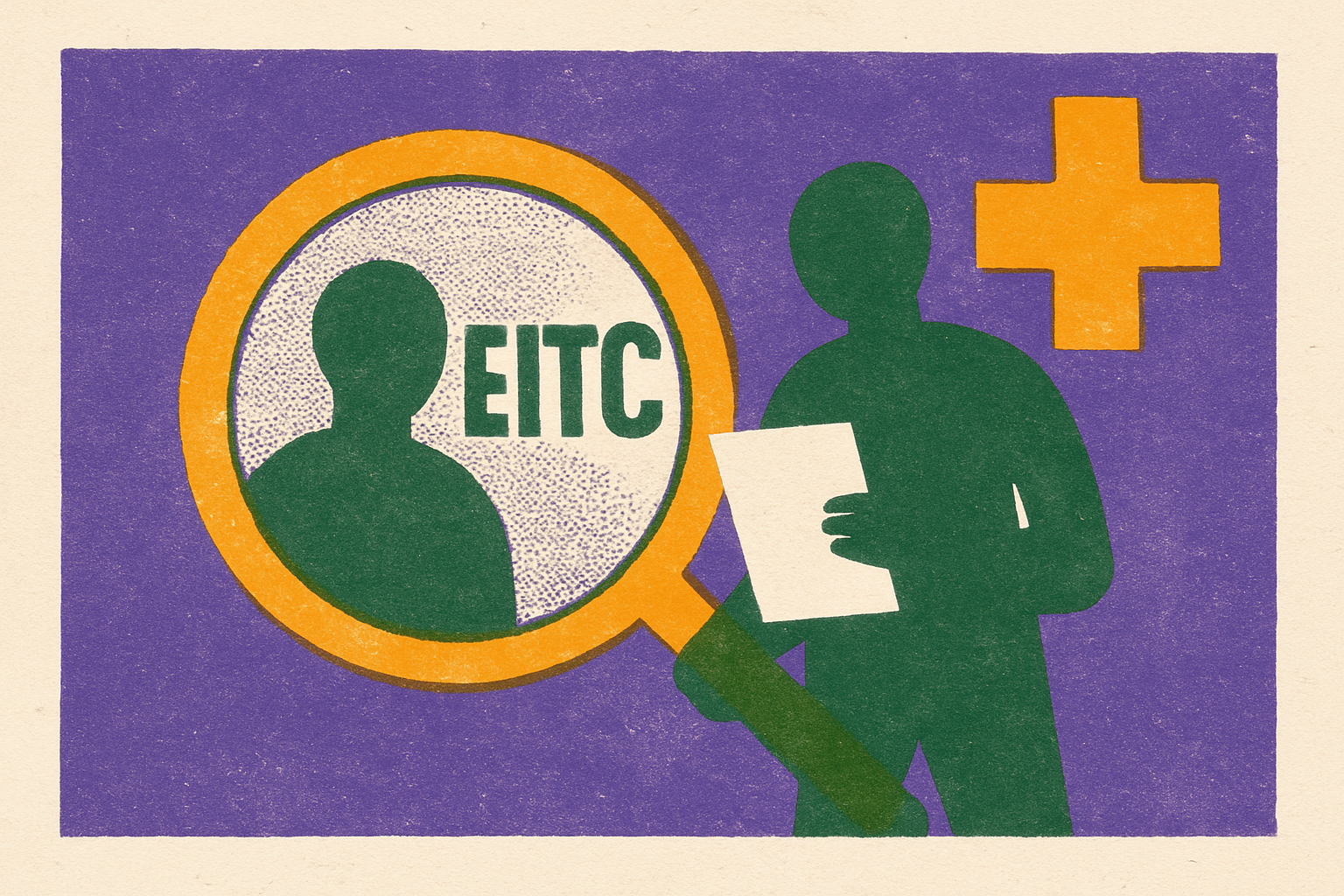
The Earned Income Tax Credit claiming gap is less a failure of awareness than a failure of access. Nearly 1 in 5 eligible taxpayers miss a credit worth a substantial amount on average for 2024 returns. Layered rules, filing requirements and income calculations stand between working people and money they qualify for, and knowing the credit exists does not mean knowing how to claim it.
Why nearly 1 in 5 eligible taxpayers miss a credit worth thousands of dollars
National taxpayer advocate Erin Collins wrote in her 2026 legislative recommendations that “eligibility requirements are complex” and that “millions of eligible taxpayers fail to claim the EITC, while other taxpayers claim amounts for which they are not eligible.” That diagnosis points to a system that fails in both directions. Some people receive too little or nothing. Others claim too much because they misread the same rules. The difficulty is not limited to taxpayers who have never heard of the credit.
Two distinct obstacles sit behind the claiming gap. Many eligible workers are not required to file a tax return, so they never enter the process through which the credit is paid. Others do not recognize that their income and family circumstances qualify them. The sums at stake are substantial for low-income households, with the maximum for filers with three or more qualifying children reaching into the thousands for tax year 2025. Yet access depends on navigating rules that are much less straightforward than the credit’s purpose.
How the credit's phase structure makes eligibility harder to read than it looks
The EITC has three phases, which are phase-in, plateau and phase-out. During phase-in, the credit goes up at a set percentage rate for each dollar of earned income, then stays the same on the plateau before going down during phase-out. The phase-out slope also changes by family size. It is steepest for filers with two or three qualifying children, shallower for those with one, and shallowest for childless filers.
Different kinds of income add another layer. Phase-out uses the greater of earned income or adjusted gross income, known as AGI, so investment income can reduce the credit even before it triggers outright disqualification. For 2025, investment income above $11,950 disqualifies a filer regardless of earned income. A gig worker could have modest earnings from work but enough interest or dividends to cross that line without recognizing its significance. That is a cliff.
Income is only one gate a filer must pass. Eligibility also depends on filing status, qualifying children, residency, valid Social Security numbers and foreign earned income. The 2025 AGI limits vary by filing status and number of children, making a rough estimate of earnings an unreliable guide. Even the word “refundable” hides a crucial feature in tax language. It means the IRS sends the difference in cash when the credit exceeds taxes owed, so owing no income tax does not make filing pointless.
Non-filers: the largest group of people leaving the credit unclaimed
The Tax Policy Center identifies about two-thirds of eligible non-claimants as people who did not file a federal return. The remaining third filed but did not claim the credit. Many low-income workers earn less than the standard filing threshold, so the law does not require them to file. But claiming a refundable credit still requires a return.
Those rules send two different signals to the same household. One says a return is not required, while the other makes it the only way to receive money. Timing adds another obstacle for people who do file. The PATH Act prevents the IRS from issuing EITC refunds before mid-February, leaving a delay that may discourage workers who need funds quickly.
The IRS reported that more than a billion dollars in unclaimed 2022 tax refunds, affecting more than a million people, expired on April 15, 2026. That total covers unclaimed refunds across tax benefits, including EITC. Filers have three years from the original due date to file or amend and claim the credit retroactively. Many do not know that window exists.
Gig and self-employed workers who qualify but face income-reporting traps in both directions
Gig and self-employed workers also have to work out what counts as earned income when they file. Rideshare drivers, delivery workers and freelancers may have modest net earnings that fall within EITC eligibility. Deductible business expenses can lower those earnings further, sometimes putting a worker in the phase-in range. That changes the effect of reporting less income. In this range, a smaller income figure can mean both less tax and a smaller credit.
Under-reporting income to pay less tax can therefore cost a worker the whole benefit they might otherwise get. Zero net self-employment income means zero EITC, even if money moved through the worker’s account throughout the year. The opposite approach is not a solution. Deliberately overstating income to maximize the credit is fraud, and IRS algorithms compare 1099-K data with reported figures, making mismatches detectable. The structural squeeze is that accurate reporting requires understanding both business income and a credit whose value does not move in one direction.
Verification is harder for this group as well. The IRS cannot obtain third-party information about gig and self-employment earnings as easily as it can for W-2 wages. That makes errors harder to catch and compliance harder to establish. Meanwhile, interest, dividends or income from a small rental can bring the separate investment-income limit into play.
Childless workers and young adults who get a fraction of what families receive
Childless filers received an average credit roughly a ninth as large as the average for families with qualifying children. Their maximum for 2025 was approximately one-twelfth of the maximum for the largest families. The vast majority of EITC dollars flow to families with children. Workers without qualifying children are offered a much smaller benefit for navigating the rules.
Childless workers must be ages 25–64 to qualify, so younger adults are left out. Even among those who qualify, the expected refund may not seem worth the effort of filing, particularly when no return is otherwise required.
A worker may understand the credit and still decide not to pursue it. For this population, non-claiming cannot always be explained as a missed message or a misunderstood rule. The size of the benefit is part of the barrier.
Immigrant and mixed-status families who are eligible but do not claim
Fear of immigration consequences, language barriers and distrust of government institutions can keep eligible people from engaging with the tax system. Those concerns add to the difficulty of meeting the eligibility rules. Learning that the EITC exists may not resolve them.
The rules for Social Security numbers can also confuse people. The filer and any qualifying children must have a valid number to qualify, while some members of mixed-status households may have those numbers and others may not. Some claims are disqualified, but that does not mean every mixed-status family is ineligible. Understanding which family members meet the rules is itself a hurdle. People who are unsure of the rules and also face fear or a language barrier may leave money they qualify for unclaimed.
The EITC and Child Tax Credit help workers and families pay for childcare, food, medical care and housing. Their reach shrinks when eligible households avoid filing. This is not simply a question of distributing clearer information. The information must reach people who may distrust the process through which the benefit is delivered.
How preparer quality and self-preparation errors widen the gap for those who do file
Filing a return does not guarantee a correct claim. The California Policy Lab study found that, among the SNAP recipients studied, those who filed self-prepared returns were more likely to leave the federal EITC unclaimed than those who used VITA or paid preparers. Its main finding about preparers concerned a different gap, with paid-preparer returns dominating CalEITC non-claiming among federal EITC claimants.
IRS research found that roughly half of EITC returns submitted by unenrolled preparers claimed larger refunds than filers were eligible to receive. Those returns comprised about 91% of all EITC audits and the large majority of post-audit adjustments. Preparer quality therefore affects more than the initial refund. It can expose low-income filers to an audit they have little capacity to manage. Most EITC recipients cannot afford someone to represent them, and many who do qualify cannot provide the documents an examiner needs to accept their claims.
IRS research identifies complex rules, rather than intentional fraud, as the main driver of improper payments. The Treasury Department estimated that residency and relationship requirements, filing-status issues and questions about who can claim a child in non-traditional family arrangements account for the large majority of those payments. The same difficult judgments that cause eligible people to miss out also produce errors in the other direction.
Why outreach alone does not close the gap — and what the improper-payment rate makes harder
Outreach and free filing assistance address real barriers, but they cannot remove the rules underneath them. VITA reaches only a fraction of the millions of eligible non-claimants each year. The mismatch between capacity and need is structural. More awareness can bring someone to the filing process without making their income, residency or qualifying-child questions easier to resolve.
The improper-payment rate makes that distinction harder to act on. It remained above one-fifth across fiscal years 2006 through 2025, creating political and institutional pressure for Congress and the IRS to restrict access. Complexity then becomes both a source of errors and a reason to retain demanding checks. People missing benefits and people receiving incorrect amounts appear to be competing problems. In practice, they often face the same underlying obstacle.
The strongest objection to simplification is that removing verification burdens could make fraud easier. But complexity is an inefficient fraud screen when most improper payments stem from unintentional mistakes. It burdens eligible filers without reliably separating them from deliberate bad actors.
What eligible filers can do right now to claim what they are owed
Use the free online IRS EITC Assistant, which walks through the rules for filing status, income and qualifying-child criteria. If eligible, file to claim the refundable credit even when a return is not otherwise required. Owing no income tax is not a reason to leave it unclaimed.
Check the three-year window measured from the original return due date, and file a missing return or amend an existing one through Form 1040-X as appropriate. The deadline is not the only timing issue. Paper-amended returns were taking up to 16 weeks to process as of early 2026. A retroactive claim can help, but it does not promise quick payment.
Seek free preparation through VITA or Get Your Refund. VITA has the lowest error rate in the industry, and the virtual option removes a geographic barrier. Also track investment income against the limit for the relevant tax year, including the $11,950 threshold for 2025. Interest, dividends and other investment income can disqualify an otherwise eligible worker. Congress created this credit because working people can still need support, and claiming that support starts with recognizing that a filing window may still be open.