Why Subscription Cancellation Apps Hit Different When Every Dollar Is Spoken For
Automated detection replaces the vigilance tight budgets cannot afford.

The substantial gap between recalled and itemized subscription spending is built into how subscriptions are sold. An app to cancel subscriptions helps by finding recurring charges across connected accounts and showing what to do next. When every dollar is spoken for, that continuous detection becomes essential because it replaces vigilance a stretched household cannot spare.
Why the spending gap turns from an inconvenience into a crisis when income is tight
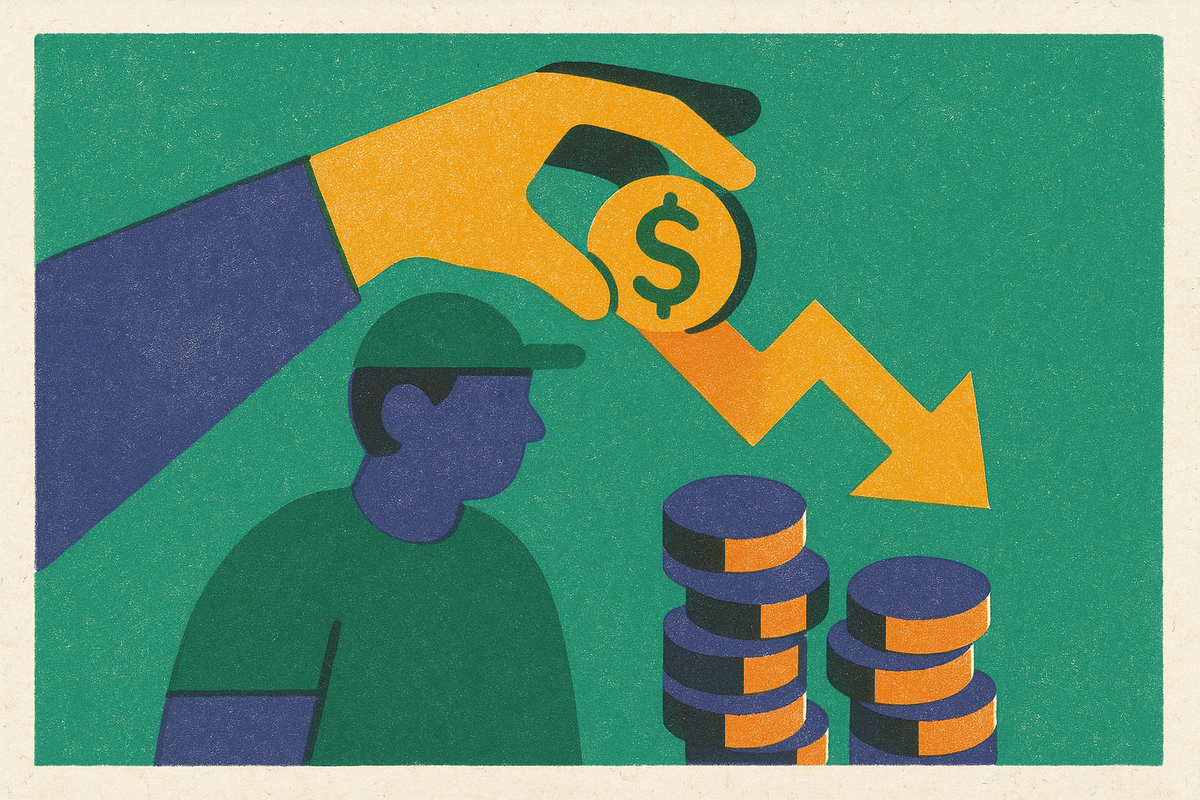
A budget with money to spare can cover an unexpected recurring charge. A fully assigned budget cannot do that without taking money from another purpose. For lowest-income households, subscriptions consume more than 5% of pre-tax income, a share that rivals what most Americans put toward retirement savings. A subscription’s cost needs to be included when the household decides what it can afford.
C+R Research found that consumers consistently underestimate their monthly subscription spending, with recalled estimates running far below itemized totals. That distinction separates the budget someone thinks they have from the obligations actually posting to their accounts. The cuts cover only the spending the person already knows about. A recurring charge outside that picture can keep taking money even after the rest of the budget has been pared back.
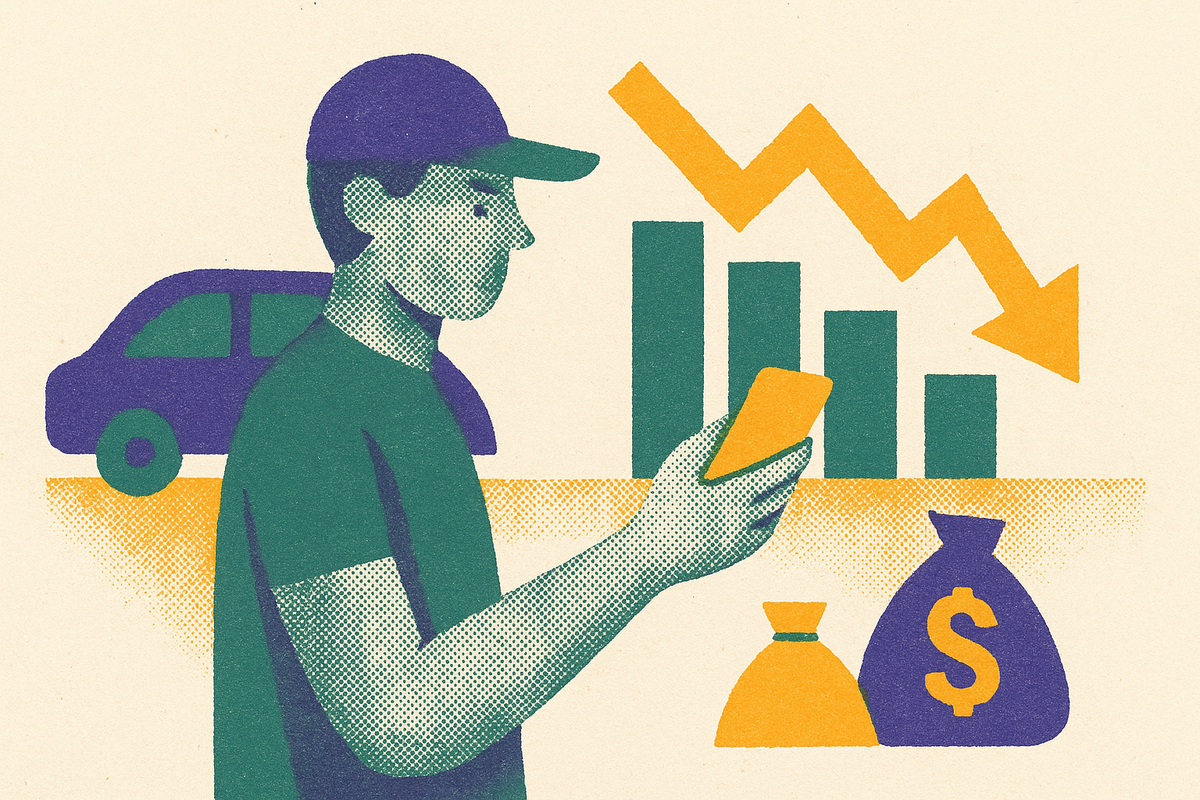
Self Financial’s 2026 survey found that more than half of consumers pay for at least one service they have not used in the past month, with multiple unused paid subscriptions per person each month on average. Not every unused service is unwanted, but paying does not prove that a service still earns its place. Once a household has trimmed its spending, the subscriptions it consciously keeps represent choices. The invisible ones escape that same test. Telling someone in that position to pay closer attention misses the constraint, because tighter budgets already demand more attention for higher-stakes decisions.
What makes subscriptions so hard to see even when you are actively looking
Free trials separate the moment of commitment from the moment of cost. At signup, there may be no charge to weigh against the household budget. The payment comes later, when the trial converts automatically and the original decision is no longer fresh. The delay does part of the selling. Catching it takes remembering a payment that will be due later, beyond checking whether money left the account today.
Annual billing creates a different blind spot. A charge that posts once a year is easier to forget and harder to catch in a monthly statement review. The charge can still be due even when it is missing from the current statement. Meanwhile, small monthly charges are hard to spot for the opposite reason: they appear in statements each month but look too small to check. Each can seem negligible even when their combined cost is not.
A statement lists transactions, but it does not necessarily assemble the subscription picture a household needs. A full manual review requires cross-referencing bank statements, credit card statements, email receipts, and calendar reminders. Transactions show payments, while receipts and reminders can help expose commitments that have not yet produced a charge. Looking carefully at one source can still leave the others out.
This fragmented view also explains why subscription counts vary so widely. The number someone consciously manages is not the same as the number a full bank-and-card audit reveals. Consumers still struggle to see all their subscriptions despite active effort because they must reconstruct a whole picture from records that were never presented as one.
How do apps help you find and cancel unwanted subscriptions in one place?
Subscription management tools start with recurring activity across connected accounts instead of asking the user to list what they remember. That lets them surface payments the user forgot, as well as charges the user would not describe as subscriptions. Compared with a manual review, their advantage is continuous detection without requiring the person to repeat the same audit whenever another billing cycle arrives.
A person who looks carefully can find recurring charges by hand. What the tool changes is the work required to keep finding them over time and across accounts. Automation is the fitting response to automated billing because it keeps watching between the moments when the user has time to look.
Detection still needs a usable end point. A finding should show a specific dollar amount and a clear next action, rather than leave the user to investigate what the charge means and how to respond. Finding a charge and canceling it are also distinct capabilities. A tool that guides the user through a decision is not the same as one that initiates cancellation on the user’s behalf.
The sources a tool connects to determine what it can see. Bank transactions can show recurring payments, while connections to email and calendars can help catch a free trial before its first paid billing cycle. Tools should therefore be compared by which accounts they cover, how they track trials, how clear each finding is, and who cancels the subscription. Those criteria reveal more than a promise to put everything in one place, because a single screen is only as complete as the context behind it.
The security objection to linking accounts, and why read-only access changes the risk profile
Linking financial accounts calls for a close look at the risks, especially when the goal is to protect a tight budget. Read-only access lets a tool see transaction data but gives it no way to push payments, change account settings, or move money. It is permission to inspect, not transact. That is a fundamentally different arrangement from giving a tool authority to act on an account.
Modern account-linking uses secure data aggregation flows in which authentication happens at the financial institution or aggregator. The app receives a data feed. This separates access to financial information from possession of the login details. That separation changes the risk of money being stolen when a tool has permission to make payments. It does not settle every question about what happens to the information once the provider receives it.
Read-only data can still reveal a great deal. A provider may retain more information than it needs or share data with third parties, and read-only permissions do not prevent either practice. Consumers therefore need to scrutinize privacy policies and data retention terms. Access limits answer what the tool can do to the account. Data practices answer what the provider can do with what it learns.
Refusing every connection also has a cost. A tool needs enough information from the accounts to show all the recurring spending and the details of each charge. Adding accounts that have those charges gives the tool more to work with, and that access alone is no reason for distrust. Consumers have to weigh how much the tool can show them against how it handles their data, without assuming that the choice is between perfect privacy and certain theft. For a consumer savings product, read-only is the right default because detection does not require permission to move the money being monitored.
How cancellation is changing at the market and regulatory level, and what that means for consumers
A regulatory agency’s click-to-cancel rule was designed to make canceling as easy as signing up. The Eighth Circuit vacated it in July 2025, so the rule is no longer in effect. Consumers cannot treat it as a current guarantee. Its intended standard nevertheless captures the imbalance behind the category, where starting a recurring payment and stopping one have not demanded equal effort. Easier cancellation would reduce that friction, but it would not identify the unwanted service for the person paying.
ROSCA and state-level automatic-renewal legislation also require providers to make billing clear. These rules set obligations for providers rather than taking over the consumer’s monitoring work. A clearer disclosure still needs to be noticed. Even when a business must provide a better route out, the consumer still has to recognize the charge and initiate the exit.
Major financial institutions have begun adding ways to see and manage subscriptions in their mobile banking platforms. That places the function closer to the accounts where recurring charges appear and signals that it is becoming financial infrastructure. But location alone does not establish coverage. A banking interface and a tool drawing on transactions, email, and calendar information start with different evidence. Their usefulness depends on what they can detect and what help follows the finding.
Total subscription spending is climbing even as individual households cancel more. New commitments and existing payments still need to remain visible. Market changes and billing rules can improve the conditions under which consumers act, but neither replaces the need to notice what is being charged.
Where AI-powered tools are taking this category beyond simple detection
The next step is to catch an obligation before it becomes a payment. Passive tracking tells a user what posted, while more proactive tools can surface a trial about to convert, a bill that quietly increased, or a promised refund that never arrived. These findings operate at different points in the payment cycle. A trial warning can arrive before money leaves, while a missing-refund finding shows money that should have come back. Both go beyond identifying a repeating transaction.
Timing is especially important when the budget has no spare room. A record of an unwanted payment can explain a shortfall, but it cannot provide the same opportunity as a warning before that payment occurs. Better AI categorization also narrows the gap between what tools detect and what actually posts. Precision reduces the work left to the user. A finding that identifies the charge accurately and makes its cost clear is easier to act on than an unexplained alert.
More capable tools also raise a harder question about authority. Systems that move money, start cancellations, or negotiate bills carry different risks from those that only show what they find. Convenience does not erase that distinction. For a consumer evaluating a tool, the question is whether it explains the next step or takes that step without the user’s involvement. Both models exist, and the answer determines how much control the user is handing over.
Compass+ is one option built around read-only connections to bank accounts, email, calendar, Amazon and shopping, and subscription services, using AI-powered monitoring to surface each finding with a specific dollar amount and a clear next action. It leaves the user to authorize every step.
A household should not have to reconstruct its financial commitments from scratch just to decide which ones to keep. The tool can take on the continuous search while the person retains the choice. When every dollar already has a job, the useful advance is earlier, clearer notice of a competing demand on it, with a path to stop the charge before another billing cycle makes the decision by default.