Why Subscriptions Stay Hidden Longest on Accounts Checked Only at Zero
A five-source audit catches the small charges a crisis check misses.
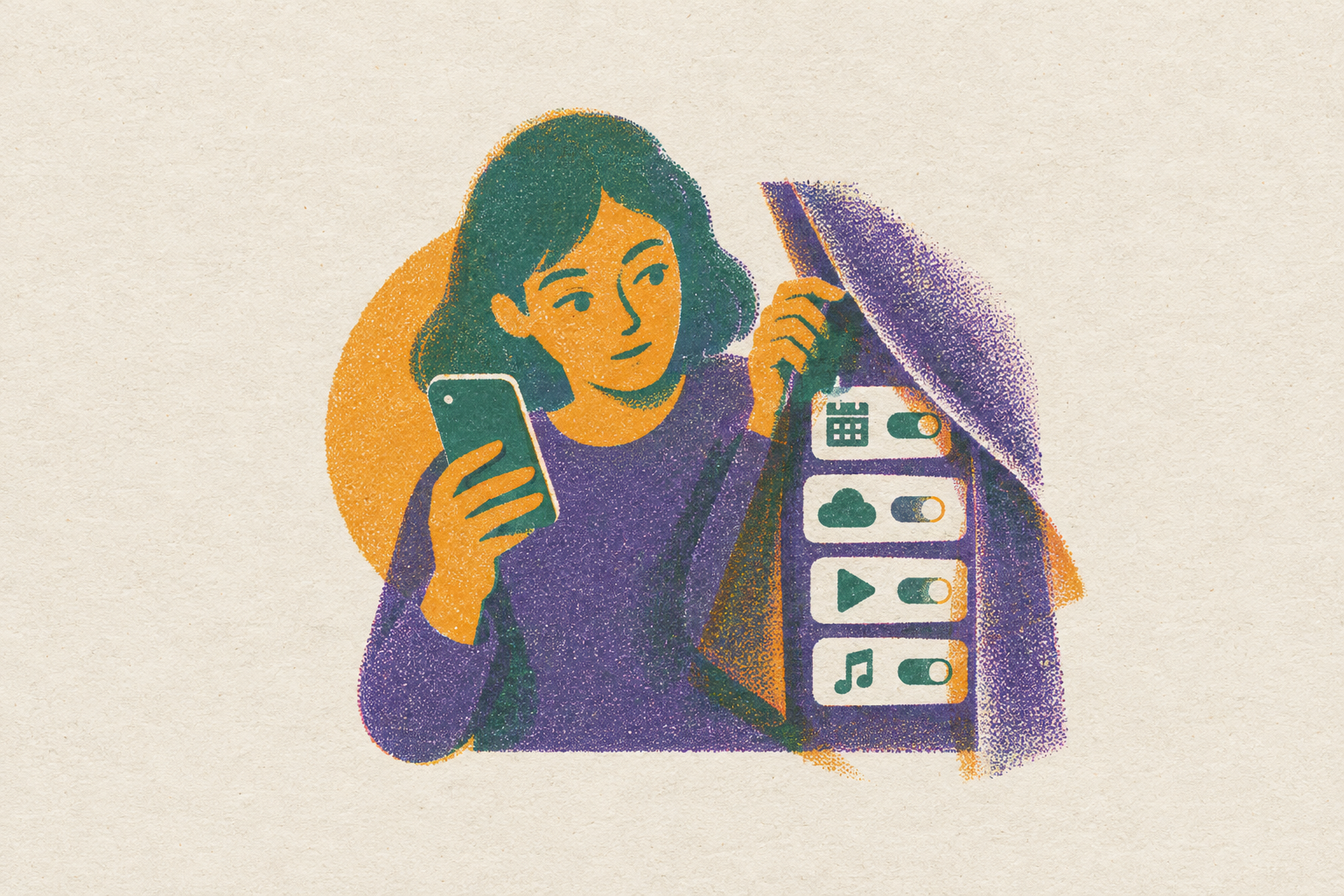
To find and cancel forgotten subscriptions, review every bank and card account, device subscription lists, PayPal automatic payments, billing emails, and YouTube memberships, then document each cancellation. Use a 13-month statement lookback to catch annual renewals as well as monthly charges. Checking only when the balance hits zero misses the pattern because your attention goes to the shortfall, leaving the small payments that cleared before it overlooked.
Why checking your balance only at zero is structurally blind to subscription charges
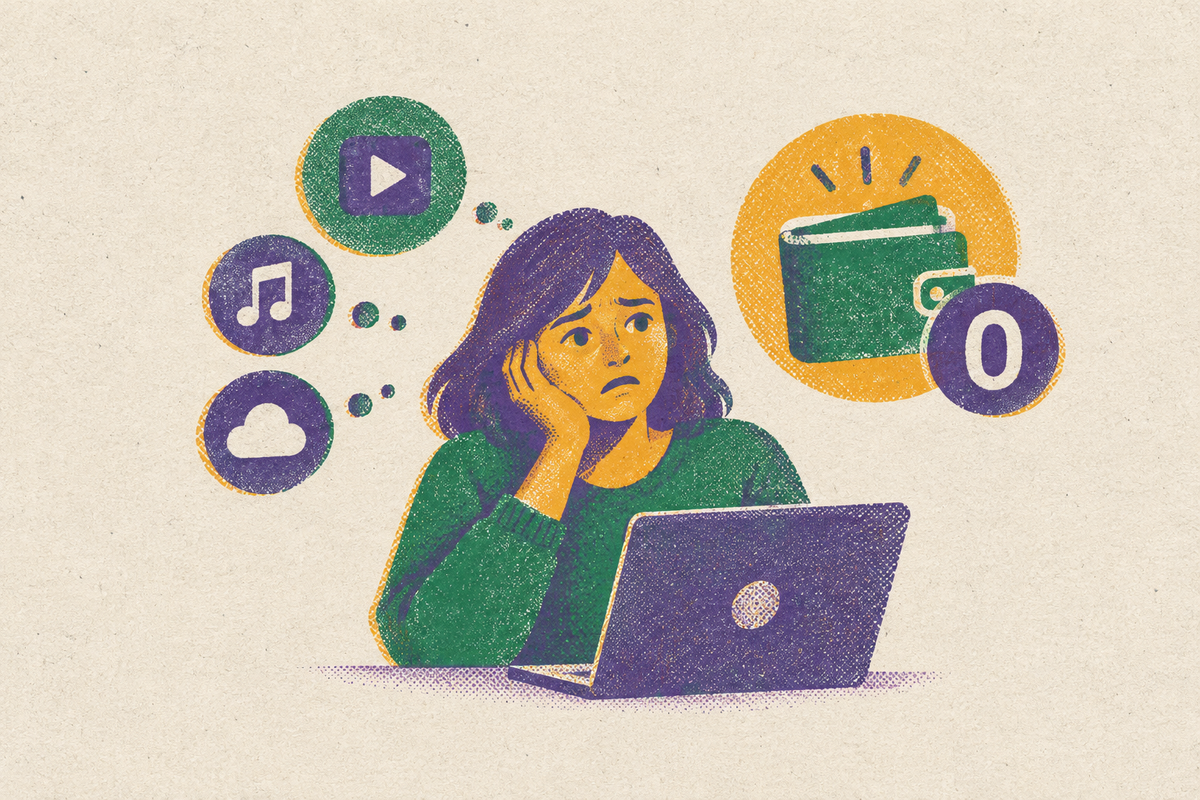
You open the banking app and see almost nothing left. What just happened, and what can you do right now? Your attention goes to the payment you need to make or the charge that finally pushed the account over the edge. Looking back through the last 90 days is a different task, and the emergency leaves little room for it.
A balance check tells you how much money is left, while a subscription audit asks what keeps taking money out. By the time the balance reaches zero, earlier subscription charges have cleared and become past transactions. You are trying to handle the shortage at precisely the moment when tracing its quieter causes is hardest.
How subscriptions are specifically engineered to avoid the kind of attention a zero-balance check produces
Subscription businesses benefit when customers do not cancel, and automatic billing removes the decision that might prompt them to stop. Once a payment is authorized, there is no need to choose it again each month. The service can stop being useful without anything in the payment process asking whether you still want it.
Annual billing stretches that gap to 365 days. There is one charge, a receipt that can disappear into an inbox, and then silence until the next renewal. By then, the original purchase may no longer feel like an active commitment. A check of this month’s transactions cannot reveal a charge that happened months earlier.
Abbreviated merchant labels such as “GOOG*SVCS” do not give you the same clear reminder as the name you remember signing up for. Along with automatic payment and long gaps between renewals, that makes a charge easier to miss when you rush to find what went wrong.
Why these mechanisms hit hardest on accounts that rarely carry a cushion
A forgotten subscription can trigger an overdraft fee larger than the subscription itself. That is where a small charge becomes two costs. A $12.99 payment may barely register on a well-cushioned account, but on a paycheck-to-paycheck account it can decide whether another payment clears.
A low balance also changes the purpose of checking. When money is either enough for now or already short, there may be no comfortable middle period that invites a careful review. Checking becomes reactive because the immediate question is whether the account can cover what comes next. More crisis checks do not necessarily produce better detection.
A trial started during a less tight financial moment can become a paid subscription during a harder one, without a fresh decision in between. The signup and its cost belong to different circumstances. By the time the charge becomes urgent, the easy opportunity to stop it before payment has passed.
The categories where forgotten charges accumulate most reliably
The most persistent forgotten subscriptions are often those whose use fades before their billing does. Annual VPN, antivirus, and cloud storage plans can outlast the security concern or storage need that prompted the purchase. The original reason recedes, but renewal remains automatic. Even a renewal email may fail to restore awareness if it looks suspicious enough to delete unread.
Food delivery memberships such as DoorDash DashPass, Uber One, and Grubhub+ can remain after a heavy-ordering phase ends. Gaming subscriptions such as PlayStation Plus, Xbox Game Pass, and Nintendo Switch Online are easy to miss when you play less, because no gaming session reminds you they exist. Less use does not mean less billing.
Amazon add-ons have a different camouflage. Audible, Kindle Unlimited, Amazon Music Unlimited, and Prime Video channel subscriptions each bill on their own, but the charges can appear on statements under similar merchant strings. Recognizing the merchant is not the same as identifying the subscription. PayPal automatic payments add a separate authorization layer, so a card statement alone is not an inventory of the permissions still active there.
Why cancellation is harder than it looks even after a charge is found
Finding a charge and stopping it are separate jobs. Some services make signup simple while putting cancellation behind confusing steps, deadlines, or a customer-service call. Subscription boxes and some fitness services require that call even when joining was easy. When someone is already short on time, that extra work can leave them paying for something they no longer want.
Red Rocks Credit Union’s consumer guide explains that clicking “Try for Free” can mean agreeing to recurring payments. Deceptive design tactics, often called dark patterns, can make that commitment less obvious than the signup button. Cancellation can be similarly unclear. Some services continue billing after a claimed cancellation, citing a missed deadline or the wrong process.
The FTC submitted a draft Advance Notice of Proposed Rulemaking concerning its Rule Concerning the Use of Prenotification Negative Option Plans to the Office of Information and Regulatory Affairs on January 30, 2026. That action shows the billing model is under regulatory attention, but it is not a cancellation confirmation for your account. The practical protection is documentation. Save screenshots and confirmation emails instead of trusting what someone told you or your memory of clicking a button.
How do you find and cancel your subscriptions with a five-source audit?
Start with the bank and card statements for every account, including cards other than your main one. Review 90 days for monthly subscriptions, or use 13 months if you are making only one pass so annual renewals are included. Sort by merchant name if the bank allows it. Flag every charge under $25 that you do not immediately recognize, and search unfamiliar merchant strings before dismissing them. Amounts that appear repeatedly on statements need a closer look even when the billing dates change.
Second, check the subscription lists on your devices for in-app purchases. Card statements do not name each of these subscriptions, so the platform list shows you what the statement leaves out. On iPhone or iPad, go to Settings → name → Subscriptions. On Apple TV 4K, go to Settings → Profiles and Accounts → [profile] → Subscriptions.
Third, inspect PayPal’s automatic-payment authorizations directly rather than treating a card statement as a substitute. Log in to PayPal → Settings → Payments → Manage automatic payments. This is a separate place to review. The authorization layer can remain out of sight when your attention is limited to transactions on a card.
Fourth, search your email inbox for “receipt”, “invoice”, “subscription”, “renewal”, and “billing”. These searches can uncover annual payments that no longer appear in your current statement and reminders that were ignored or filtered away. Read the renewal notices as well as receipts. One tells you a charge is coming, while the other helps you work out what an earlier payment was for.
Fifth, check your memberships on YouTube if you use them. Tap your profile picture, then tap Purchases and memberships to view memberships and subscriptions. The aim is to match charges with the services behind them, rather than assume that one bank screen describes every active commitment.
For each unwanted subscription you uncover, follow the service’s cancellation process and save its confirmation. If it calls for a customer-service call, keep whatever confirmation the service gives you as proof of cancellation. This audit is specifically designed to uncover payments ordinary balance checks miss.
What to do when a hidden subscription has already caused an overdraft or cash shortfall
If the account is already short, stopping the next renewal still leaves you short today. High-APR payday loans can turn a short spell without enough money into a debt trap, while emergency options that charge fees add to the cost of the original payment. Compare an option’s process, charges, and promised speed of payment.
Gerald offers cash advances up to $200 with no interest, subscription fee, transfer fee, or credit check. Its sequence is important to understand before relying on it. First, use its Buy Now, Pay Later feature for a purchase in Cornerstore, using part of your approved advance. That purchase unlocks a completely fee-free cash advance transfer, so this is not a straight-to-cash process without a shopping step.
Earned wage access is another way for workers who qualify to get money. Payactiv, Tapcheck, and DailyPay give hourly and gig workers access to wages already earned before payday, at low or no cost. Unlike cash advance apps, these services need your employer to set up an integration. Without that employer integration, the option is unavailable even if its costs are suitable.
If you believe a charge was unauthorized or the recurring payment was not properly disclosed, contact the card issuer to initiate a chargeback. Keep screenshots of cancellation attempts and any confirmation emails to support the dispute. A forgotten purchase and an unauthorized charge are different situations. The reason for disputing the payment should reflect what happened.
For future incidents, consider switching to a no-overdraft-fee account that allows a negative balance without that fee. This removes one source of compounding cost. That makes it a structural protection against the second hit, rather than a substitute for finding and cancelling the first charge.
Preventing subscriptions from hiding again after the audit is done
A completed audit clears the backlog, but new subscriptions can recreate it. On the day you start a free trial, set a calendar reminder for the day before it ends. That puts the cancellation decision back in front of you while there is still time to avoid conversion to a paid plan.
Bank or app alerts can also remind you when a new recurring charge is above an amount you choose. They can make new payments visible sooner. A tracker can also keep subscriptions in view. Rocket Money links to bank accounts using read-only access, while CostLoop and SubPlus are manual trackers that do not connect to bank accounts. When considering an app, look for read-only rather than write access where a connection is involved, and check its own terms for explicit fee-free language.
Set a calendar reminder to do the five-source audit again every six months. Keep the annual lookback in that review so long billing gaps do not become another hiding place. The goal is to keep only the recurring payments you know about and actively choose.
Checking only at zero can be a rational response to constrained circumstances. A reminder, an alert, and a scheduled review move detection away from the crisis moment. You no longer have to wait until the account is empty to learn what has been draining it.