When Your Bill Goes Up $4 and Your Budget Has No Room to Absorb It
Small subscription hikes quietly drain tight budgets, and here's how to catch them.
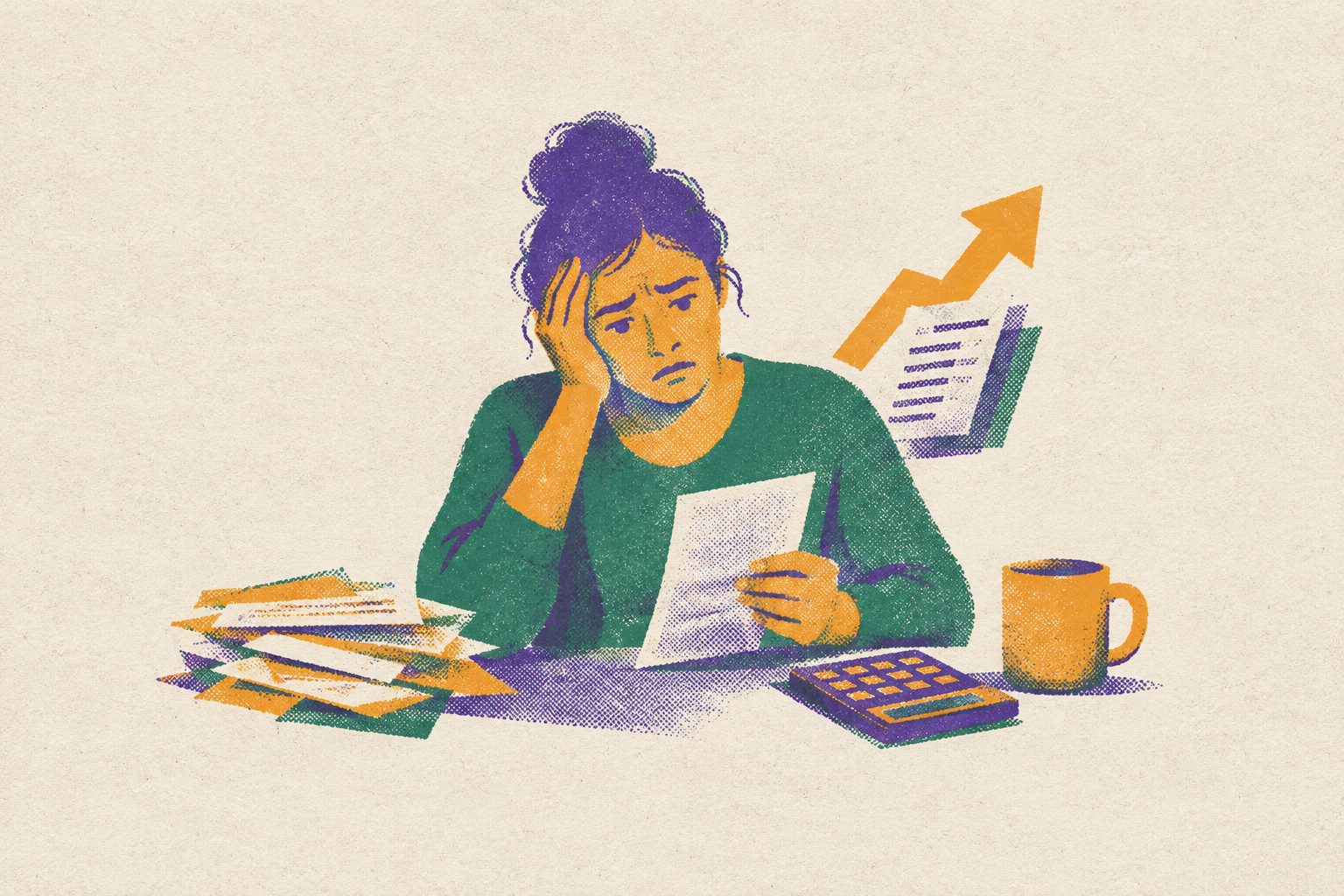
A small bill increase can break a budget with no spare room, especially when other subscriptions are quietly doing the same thing. To catch those increases and duplicate charges, check recurring payments in all your accounts over several billing cycles, then keep watching for changes. The way subscriptions are priced makes small increases easy to miss and costly to leave alone.
How subscription pricing is designed to stay below the threshold of attention
Your bill goes up slightly, but your budget has no room to absorb it. The service is familiar, the payment is automatic, and canceling would mean finding time to deal with it. So the charge clears at the new price. Later, another service raises its rate. Neither change looks like a major spending decision, yet both take money that already had a job.
That is the mechanism behind subscription price creep. A big increase makes a subscriber think again about buying the service, while a small monthly increase is easier to accept without thinking. Auto-renewal removes the need to make that choice at all. Money leaves before the question of value comes up.
Timing makes the design harder to see. One service charges on the 4th, another on the 12th, another on the 28th, so the increases never arrive as one request for more money. They appear among other payments on scattered billing dates, each looking much like the charge before it. Every new subscription adds another amount and billing date to remember. The growing stack becomes harder to see precisely because it keeps growing.
What the late-2025 round of streaming and music price hikes actually added up to
Peacock increased prices on both tiers in mid-2025. A subscriber could keep exactly the same service and still owe more at renewal. There was no new purchase to mark the change. For a household holding several subscriptions, that distinction is important because a higher total bill need not reflect any decision to add entertainment.
Spotify’s increase belongs to the part of the timeline after late 2025. The company announced increases across Individual, Duo, Family, and Student plans in January 2026, effective with February billing. That timing keeps the account of these hikes honest. It also illustrates the staggered pattern, with one service becoming more expensive months after another.
There is no single dollar total for every household. The increase depends on the services and plans someone holds, and these changes alone do not establish one universal amount. The concrete consequence is a higher recurring bill without an additional subscription.
These are also relatively visible subscriptions. People tend to recognize the music and streaming services they actively use. The harder layer to track is everything underneath them, including smaller app charges and services that no longer come to mind.
Why the perception gap between what people think they spend and what they actually spend persists
Remembering a subscription is not the same as remembering its current price. Someone can accurately name the services they use while estimating their cost from older rates. Each payment looks too minor to deserve a fresh review, even when the combined amount deserves one.
The gap persists across income levels, age groups, and financial literacy categories because the payment structure stays the same. Billing dates are scattered, individual amounts are modest, and renewal requires no effort. Cancellation, by contrast, demands attention and action.
Budgeting apps and bank categories seem like an obvious answer. Why is there still a gap when those tools are there? Because showing a transaction is not the same as drawing attention to a change in it. A charge can sit accurately recorded in an account history without prompting anyone to compare it with previous billing cycles.
A majority of consumers have all their subscriptions set to auto-pay, so charges clear before anyone considers whether the service still earns its place. The system only requires people not to interrupt their spending.
How small increases compound into a shortfall no one approved
The streaming and music increases are only one layer. With cloud storage, a news paywall, an AI tool, and a gym app, the same mechanism reaches well beyond entertainment. Across a year or more, a household can absorb a dozen quiet hikes. The household has to pay more each month even though nobody sat down and agreed to a bigger budget.
That is how small changes become a shortfall. The household still has the same income available for its existing obligations, but more of it now goes to subscriptions. Streaming prices also do not necessarily move at the same rate as general inflation.
Forgotten subscriptions add a separate drain. Some subscribers pay for services they do not use at all. Annual billing makes this harder to notice because an ongoing commitment billed as a lump sum can feel like an isolated purchase. When a forgotten annual subscription renews, the leak arrives all at once.
Free trials are another way the stack grows. Someone who meant to cancel a service has to pay for it once the deadline passes. Premium AI tools are a newer category, and paying users have more than one subscription in that category alone. None of these costs needs to look alarming by itself. Together, they claim money the household never consciously set aside for them.
Why the cancellation route is harder to find than the sign-up route, by design
Canceling unused services is the natural response to that squeeze. But the exit can demand far more effort than the entrance. Signing up usually takes very few clicks, but records of cancellation flows show that canceling takes many more steps. That imbalance favors another renewal whenever someone gives up or postpones finishing.
The Federal Trade Commission’s Uber One lawsuit alleged that cancellation could require up to 23 screens in some cases before a request reached a human. That person might take a day to process it, during which the customer could be billed again. The allegation concerned a particularly burdensome cancellation route, illustrating how delay can turn an effort to stop paying into another charge. States and DC later joined the case.
Even without a long cancellation flow, the billing route can trip people up. The brand someone uses is not always the company collecting payment. If Apple bills the subscription, canceling inside the app does not resolve that billing relationship. Deleting an app leaves a subscription billed through Google Play running, and Roku subscriptions have to be canceled through Roku’s own page.
Replacing or canceling a card is not a reliable shortcut. The contract usually still applies, and card networks sometimes give merchants the new card numbers. Stopping use, deleting an app, and ending the need to pay are separate things. The distinction can leave a charge running after someone believes they have dealt with it.
Where the regulatory floor stands after the FTC's click-to-cancel rule was vacated
The FTC’s click-to-cancel rule was vacated, leaving no replacement rule adopted as of the coverage described here. The agency reopened rulemaking with an advance notice in March 2026. Federal rules therefore do not provide the uniform cancellation standard consumers might expect.
California’s amended Automatic Renewal Law, AB 2863, has been in effect since July 1, 2025. It requires online cancellation for online sign-ups, at will and without extra obstruction. Phone sign-ups must also have a phone cancellation route. The requirement follows the way the consumer enrolled rather than making online cancellation the sole route for everyone.
New York City’s Click-to-Cancel rule has an effective date of October 1, 2026. It requires cancellation to be at least as easy as sign-up and available through the same medium. Fines escalate with violations, with additional restitution liability for charges collected after a consumer’s first cancellation attempt. The EU Consumer Rights Directive’s June 2026 requirement builds on the long-standing 14-day withdrawal right by adding a dedicated withdrawal button for online contracts that qualify, with the existing exemptions still in place.
Location therefore shapes the protection available. State, city, and international rules fill parts of the federal gap, but they do not create one consistent experience. Knowing the rules still leaves people to check which charges have gone up and whether billing stopped after they canceled.
How do you find bills that quietly increased on your own accounts?
The practical response starts with one complete view. Pull several months of transactions from every bank account, credit card, and digital wallet, including PayPal, Apple Pay, and Google Pay. Check recurring charges against those from earlier billing cycles as well as looking at the latest total. The aim is to find both what repeats and what has changed.
Look beyond monthly entertainment payments. Quarterly and annual charges belong in the same review, including cloud storage, antivirus, domain renewals, app subscriptions, and insurance premiums. A review covering only a few months may not show every annual renewal. That limitation means an absent charge may still be due on a longer billing cycle.
Sort each recurring payment into essential, useful, or forgotten. Essential covers utilities, insurance, and services genuinely depended on, while useful means actively used recently and worth today’s price. For everything else, test the value directly. Consider whether it has been used recently, whether it would be worth buying today, whether a free alternative is good enough, and whether paid features go untouched. Cancel forgotten services the same day.
For streaming, rotation offers another way to cut the stack. Keep one or two services active and return to the others only when a specific show drops, with a calendar alert at season end. Downgrading before canceling can also prompt a cheaper retention offer from some services. These actions address the charges already found. They cannot catch next month’s increase or next week’s trial conversion by themselves.
Why ongoing surveillance beats a one-time audit, and what that looks like in practice
The subscriptions kept after a review still renew on scattered dates, and new services add fresh deadlines. Small increases remain easy to overlook. A one-time cleanup reduces the stack without changing the conditions that made it hard to track.
A bill increase requires comparison with previous billing cycles, while a duplicate charge requires attention to repeated transactions. A promised refund requires checking whether the money arrived. A free trial needs to be watched for the deadline when it turns into a paid subscription, before the payment shows up. Treating all of these as ordinary spending totals misses the specific action each one calls for.
Coverage is just as important as detection. A view limited to one card can miss a subscription on another, a payment through PayPal, or a renewal on an annual cycle. Connecting more accounts gives monitoring a fuller picture of what is leaving the household. It also makes the findings more specific than a general warning that spending has risen.
For anyone choosing a monitoring tool, those are the useful criteria. A dashboard shows what happened. A monitoring agent goes further by explaining what needs attention, with the comparison work already done, so subscribers can interrupt subscription creep before the next quiet charge clears.